Knee Replacement Surgery
Relieving Pain, Restoring Confidence in Your Movement
Comprehensive knee replacement care in Bowral, Goulburn and Campbelltown – from conservative treatment through to total, partial, revision and robotic-assisted knee replacement surgery, always guided by the procedure that is right for you.
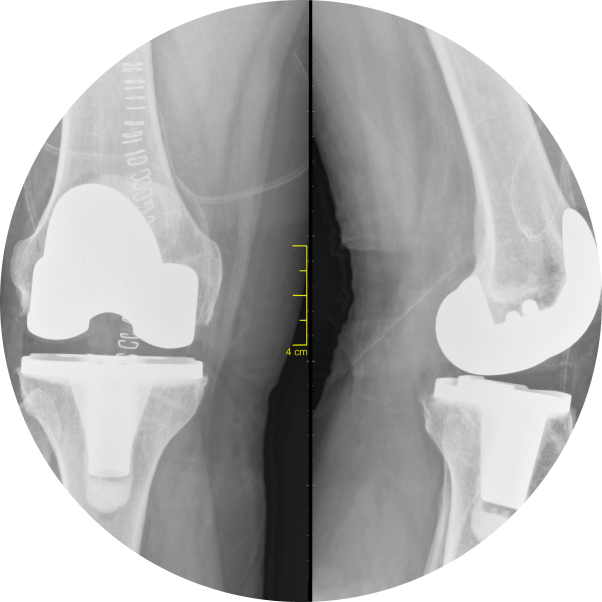

Knee pain can have a major impact on day-to-day life. For some people, it means avoiding long walks, struggling with stairs, giving up sport, or waking at night because of aching and stiffness. Over time, even simple tasks such as shopping, gardening or getting in and out of a car can become increasingly difficult.
Knee replacement surgery is one of the most common and successful orthopaedic procedures performed in Australia, but it should never be the first step. Dr Di Nallo believes surgery should only be considered when non-surgical measures have been properly explored and when symptoms are significantly affecting quality of life.
Dr Di Nallo is known for his calm, honest and down-to-earth approach. He takes the time to understand each patient’s symptoms, goals and concerns before recommending treatment. Some patients benefit from physiotherapy, injections (corticosteroid, PRP, Hyaluronic acid), weight management or bracing for many years before surgery is needed. Others may reach a point where a knee replacement surgery offers the best chance of reducing pain and restoring movement.
Understanding Knee Arthritis
The knee is the largest joint in the body and absorbs a great deal of force with every step. In fact, the knee experiences forces of up to three-to-five times body weight during walking and using stairs. Over time, the cartilage that cushions the knee can gradually wear away, leaving the joint surfaces rough, inflamed and painful.
This process is known as osteoarthritis and is the most common reason patients require knee replacement surgery.
Knee osteoarthritis affects approximately one-in-five Australians over the age of 45. According to the Australian Institute of Health and Welfare, more than 65,000 knee replacement procedures are performed in Australia every year, and this number continues to rise as the population ages.
- Pain with walking, standing or stairs
- Stiffness, particularly in the morning
- Swelling around the joint
- Grinding, clicking or crunching sensations
- Reduced movement
- Bow-legged or knock-kneed deformity
- Difficulty exercising or remaining active
- Pain at night or while resting
Not all arthritis is the same. Some people have mild wear that can be managed conservatively for many years, while others develop severe cartilage loss, deformity and persistent pain that no longer responds to non-surgical treatment.
Conditions Treated
Dr Di Nallo assesses and treats a wide range of knee conditions that may eventually require knee replacement surgery.
Knee Arthritis
Knee arthritis is the most common cause of chronic knee pain in older adults. Osteoarthritis occurs when the protective cartilage within the joint gradually breaks down. As the cartilage wears away, the bones begin to rub together, causing pain, swelling and stiffness.
Cartilage Wear and Osteoarthritis
Complex or Post-Traumatic Arthritis
Some patients develop arthritis following previous fractures, ligament injuries, meniscus tears or earlier knee surgery. This is known as post-traumatic arthritis. These cases are often more complex because the knee may already have deformity, instability or scarring from previous treatment.
Inflammatory Arthritis
Failed Previous Knee Replacement
Conservative Treatment Before Surgery
Dr Di Nallo firmly believes that the best surgical outcomes begin with a thorough trial of non-surgical treatment. Many patients can avoid or delay surgery for years with the right combination of therapies.
Depending on the severity of symptoms, conservative treatment options may include:
- Physiotherapy and strengthening exercises
- Weight management
- Activity modification
- Anti-inflammatory medication
- Cortisone or hyaluronic acid injections
- PRP injections
- Knee braces
- Walking aids
- Orthotics
- Heat and ice therapy
- Hydrotherapy
- Exercise programs tailored to arthritis
Strengthening the muscles around the knee can significantly reduce pain and improve function. Even modest weight loss can dramatically reduce pressure through the joint, with every kilogram of weight loss reducing knee load by several kilograms during walking.
When symptoms continue to worsen despite these measures, knee replacement surgery may become the most appropriate option.
Knee Replacement Procedures
Total Knee Replacement
What is a Total Knee Replacement?
A total knee replacement involves resurfacing the damaged parts of the knee joint with artificial components. The worn cartilage and bone are removed from the ends of the femur, tibia and often the underside of the kneecap. These surfaces are then replaced with metal and medical-grade plastic implants designed to recreate the smooth movement of the knee.
Total knee replacement is generally recommended when arthritis affects most, or all compartments of the knee and symptoms are severe enough to interfere with everyday life.
Who Is Suitable for Total Knee Replacement?
Patients who may benefit from total knee replacement often have:
- Severe knee pain during walking or standing
- Pain at rest or at night
- Difficulty with stairs
- Significant stiffness
- Reduced quality of life
- Advanced arthritis on X-rays
- Bow-legged or knock-kneed deformity
- Failure of non-surgical treatment
While many patients undergoing knee replacement are aged over 60, younger patients with severe arthritis may also be considered if symptoms are significantly affecting their daily life.
Benefits of Total Knee Replacement
Most patients experience major improvements in:
- Pain relief
- Walking ability
- Sleep quality
- Ability to exercise
- Independence
- Overall quality of life
Studies suggest that around 90-to-95 per cent of patients are satisfied with the outcome of their knee replacement surgery.
Partial Knee Replacement
A Smaller Procedure for the Right Patient
Not all patients need a full knee replacement. If arthritis is confined to just one part of the knee, a partial knee replacement may be a better option.
A partial knee replacement, also known as a unicompartmental knee replacement, replaces only the damaged area of the joint while preserving the healthy cartilage, ligaments and bone in the remainder of the knee.
This can provide a more natural-feeling result and often allows for a quicker recovery.
Benefits of Partial Knee Replacement
Potential advantages include:
- Smaller incision
- Less bone removal
- Faster recovery
- Less pain after surgery
- More natural knee movement
- Shorter hospital stay
- Lower blood loss
However, careful patient selection is essential. Partial knee replacement is only appropriate when the arthritis is truly limited to one compartment of the knee.
Robotic-Assisted Knee Replacement
Precision Technology to Improve Accuracy
Robotic-assisted knee replacement is an advanced surgical technique that uses computer-guided technology to improve the precision of implant positioning.
The robotic system allows Dr Di Nallo to carefully map the patient’s anatomy before surgery and make highly accurate bone cuts during the procedure. This can improve alignment, balance and implant positioning.
Potential benefits of robotic-assisted surgery may include:
- Greater surgical precision
- More accurate implant alignment
- Improved ligament balancing
- Less soft tissue trauma
- Reduced pain in the early recovery period
- Improved implant longevity
Importantly, robotic technology does not replace the surgeon. The experience, judgement and technical skill of the surgeon remain the most important factors in achieving a successful outcome.
Revision Knee Replacement
When a Previous Knee Replacement Fails
Revision knee replacement involves replacing a previous knee implant that has become loose, worn out, infected, unstable or painful.
Revision surgery is generally more complex than a primary knee replacement because there may be scar tissue, bone loss or soft tissue problems that need to be addressed.
Common reasons for revision surgery include:
- Implant loosening
- Infection
- Wear of the plastic liner
- Instability
- Persistent pain
- Stiffness
- Fracture around the implant
- Failure of the components
Dr Di Nallo performs a thorough assessment before revision surgery, which may include blood tests, X-rays, CT scans and joint aspiration to determine the cause of the problem.
Recovery After Knee Replacement Surgery
Most patients stay in hospital for two to four days following surgery. Physiotherapy begins almost immediately, often on the same day or the morning after surgery.
Recovery usually progresses through several stages:
- First few days: walking with a frame or crutches
- Two-to-six weeks: improving strength and range of movement
- Six weeks: many patients resume driving and light activities
- Three months: return to most low-impact activities
- Six-to-twelve months: ongoing improvement in strength, confidence and movement
Every patient recovers at a different pace. Dr Di Nallo works closely with physiotherapists and rehabilitation providers to ensure each patient receives an appropriate recovery plan.
What to Expect During Your Surgical Journey
Dr Di Nallo believes patients should feel informed, comfortable and supported throughout the entire process.
- Initial Consultation: Your first appointment involves a detailed discussion of your symptoms, medical history, lifestyle and goals. Dr Di Nallo will review your imaging, examine the knee and explain the available treatment options.
- Pre-Operative Planning: If surgery is recommended, you will undergo careful planning, including imaging, anaesthetic review and medical clearance where required.
- Surgery: Surgery is performed in an accredited hospital using modern techniques designed to improve recovery and pain control.
- Rehabilitation: Rehabilitation is an essential part of recovery. Physiotherapy helps restore strength, movement and confidence in the new knee.
- Follow-Up: Dr Di Nallo provides ongoing follow-up care after surgery to monitor progress and ensure patients are recovering well.
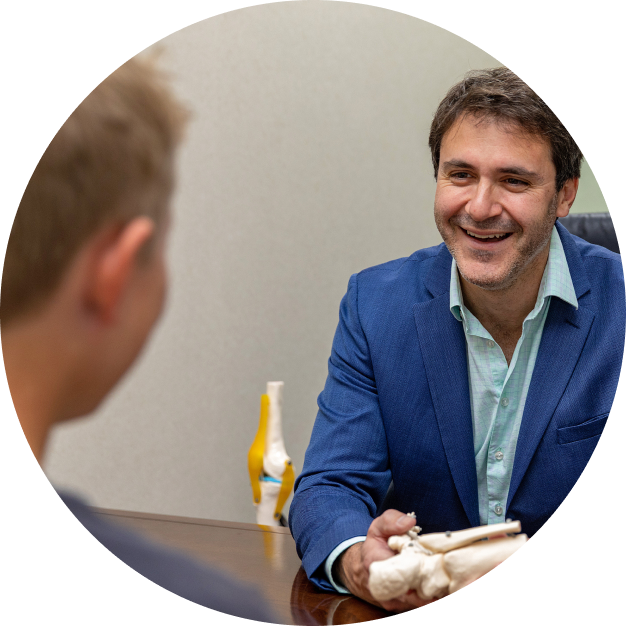
Why Choose Dr Di Nallo for Knee Replacement Surgery?
Dr Di Nallo is known for his thoughtful, honest and patient-first approach. He understands that knee replacement surgery is a major decision and that patients often feel anxious about the process.
He takes the time to listen, answer questions and explain all available options clearly. Consultations are never rushed, and patients are encouraged to fully understand their diagnosis and treatment choices before moving forward.
Importantly, Dr Di Nallo does not recommend surgery unless he genuinely believes it is the best option. His approach is always focused on achieving the best long-term outcome with the least invasive treatment possible.
Whether you are looking for advice about arthritis, exploring conservative treatment or considering knee replacement surgery, Dr Di Nallo provides comprehensive and personalised care for patients with a focus on quality clinical outcomes.